
Litchfield Park Lawn Edging Services
Choose our expert lawn edging for a polished, professional look that boosts curb appeal and keeps your landscape neat all year long.
Get a Free QuoteOur Litchfield Park Landscaping & Yard Care Services
When to Schedule Lawn Edging in Litchfield Park, Arizona – Seasonal Guide
In Litchfield Park, Arizona, the best times to schedule lawn edging are typically in early spring and late fall. These periods align with the region’s mild temperatures and reduced risk of extreme heat or frost, making it easier to achieve crisp, clean edges without stressing your turf. Neighborhoods near Tierra Verde Lake Park and the Wigwam Resort often experience unique microclimates, so it’s important to consider your property’s specific conditions.
Local environmental factors such as the area’s clay-heavy soils, variable humidity, and the prevalence of shade from mature trees in communities like Old Litchfield can all impact the timing and effectiveness of lawn edging. Additionally, Litchfield Park’s municipal guidelines and seasonal water restrictions may influence when services can be performed. For more information on local regulations, visit the official city website.
Local Factors to Consider for Lawn Edging in Litchfield Park
- Tree density and shade coverage, especially in established neighborhoods
- Soil type and drainage, which affect edge definition and turf health
- Seasonal precipitation patterns and drought risk
- Frost dates and temperature fluctuations
- Terrain variations, such as sloped lawns or proximity to water features
- Municipal restrictions on landscaping activities
Benefits of Lawn Edging in Litchfield Park
Enhanced Curb Appeal
Weed Growth Prevention
Defined Landscape Borders
Low Maintenance Solutions
Increased Property Value
Professional Installation Expertise
Litchfield Park Lawn Edging Types

Brick Lawn Edging
Brick edging offers a classic, durable border for lawns and garden beds.
-
Metal Lawn Edging
Metal edging provides a sleek, modern look and long-lasting durability.
-
Plastic Lawn Edging
Plastic edging is a cost-effective and flexible solution for defining lawn boundaries.
-
Stone Lawn Edging
Stone edging creates a natural, elegant border that blends seamlessly with landscaping.
-
Concrete Lawn Edging
Concrete edging delivers a sturdy, permanent border for any lawn or garden.
-
Wood Lawn Edging
Wood edging adds a rustic charm and is ideal for natural landscape designs.
-
Rubber Lawn Edging
Rubber edging is eco-friendly and provides a safe, flexible border for lawns.
Our Lawn Edging Process
Site Evaluation
Marking Edges
Cutting the Edge
Debris Removal
Final Inspection
Why Choose Litchfield Park Landscape Services
Litchfield Park Homeowners Trust Us
-
Comprehensive Lawn Maintenance
-
Reliable Irrigation Solutions
-
Expert Tree and Shrub Care
-
Weed and Pest Control
-
Seasonal Cleanup Services
-
Competitive Pricing
-
Satisfaction Guarantee
Coordinating Lawn Edging Services with Litchfield Park's Public Works Department
Lawn edging in Litchfield Park requires attention to the city's maintained rights-of-way, curb lines, and drainage infrastructure. Residents and property managers should coordinate with the city before edging along public sidewalks, curb-adjacent turf strips, or parkway areas to confirm property boundaries and avoid disturbing municipal assets. Edging debris—soil, grass clippings, and root fragments—must not be swept or blown into street gutters, curb inlets, or storm drains, as this material can obstruct drainage flow during monsoon events.
- Confirm the boundary between private turf and city right-of-way before edging along sidewalks or curb strips
- Collect and dispose of all edging debris on-site rather than directing it into the street or drainage system
- Report damaged curbing or sidewalk displacement caused by turf root intrusion to Public Works for evaluation
- Verify current green waste disposal procedures through the city before placing edging debris curbside
Litchfield Park Public Works
Official Website: Litchfield Park AZ Public Works
How Litchfield Park's Low-Desert Heat and Alkaline Soils Affect Lawn Edging
Litchfield Park sits within the Phoenix metropolitan low desert, classified in USDA Hardiness Zone 9b–10a, where summer temperatures routinely exceed 110°F and annual rainfall averages under eight inches. These conditions directly influence lawn edging practices in several ways. Bermudagrass, the dominant warm-season turf throughout the city, produces aggressive stolons and rhizomes that rapidly encroach across hardscape borders, requiring more frequent edging cycles than cooler climates demand. The area's alkaline, calcium carbonate–rich soils—often underlain by caliche at shallow depths—can dull mechanical edging blades quickly and resist clean vertical cuts.
- Reflected heat from block walls, concrete driveways, and decorative pavers accelerates turf desiccation along edges, making irrigation overspray management critical
- Caliche layers may be encountered just inches below the soil surface, complicating deep-cut edging and trench-style border installation
- Monsoon runoff between July and September can wash loosened edge soil into adjacent hardscape, washes, and retention basins if debris is not promptly removed
- Irrigation dependence means edging near drip or spray heads requires care to avoid severing supply lines buried close to turf borders
The University of Arizona Cooperative Extension provides region-specific guidance on bermudagrass growth patterns and maintenance timing relevant to edging frequency in low-elevation Arizona communities.
Litchfield Park's Code Enforcement and Stormwater Rules Governing Lawn Edging
Property maintenance standards in Litchfield Park are enforced through the city's Code Enforcement division, which addresses overgrown turf, encroachment onto sidewalks, and neglected landscape borders. Allowing grass to grow unchecked over curbs, walkways, or into neighboring properties may result in a code compliance notice. Property owners should verify current municipal property maintenance standards to understand edging obligations for street-facing and common-area turf.
- Turf encroachment over public sidewalks or into the street may trigger a code enforcement action; maintain clean edges along all hardscape boundaries
- Edging debris directed into storm drains violates stormwater pollution prevention principles outlined under Arizona DEQ's stormwater program and the federal Clean Water Act
- The city's Storm Water Management program promotes pollution prevention practices that apply to all landscape maintenance activities, including edging
Litchfield Park Code Enforcement
Official Website: Litchfield Park AZ Code Enforcement
Litchfield Park Storm Water Management
Official Website: Litchfield Park AZ Storm Water Management
Residents near retention basins, flood-control channels, or wash corridors should exercise particular caution to prevent edging spoils from entering these drainage features. The city's Engineering Department administers floodplain and drainage infrastructure oversight and can clarify setback or maintenance expectations for properties adjacent to engineered drainage facilities.
Timing and Methods for Professional Lawn Edging in Litchfield Park's Climate
Effective lawn edging in the low desert follows the active growth cycle of bermudagrass, which peaks from late April through September. During this period, stolons can extend several inches per week across sidewalk joints, mow strips, and driveway seams, necessitating edging on a weekly or biweekly schedule. During the cooler months, when bermudagrass enters dormancy or properties are overseeded with perennial ryegrass, edging frequency can typically be reduced to biweekly or monthly intervals.
- Mechanical blade edging along concrete curbs and sidewalks should maintain a vertical cut approximately two to three inches deep to sever lateral runners cleanly
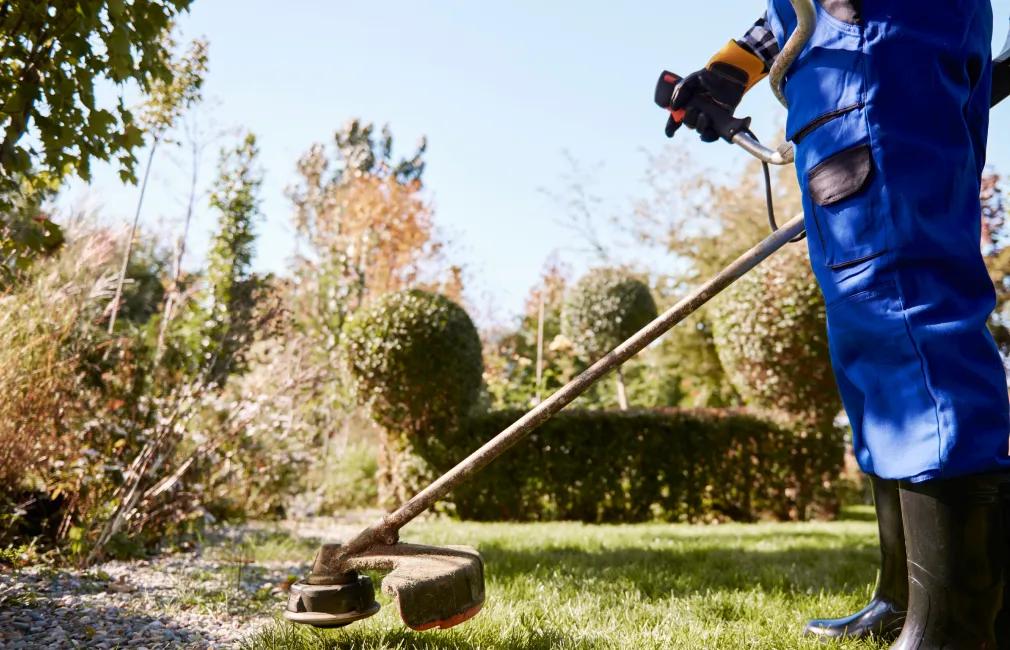
- String trimmer edging is appropriate for softer borders such as landscape rock transitions and planting bed perimeters but produces more scattered debris
- Early morning scheduling (before 9:00 a.m. during summer) reduces heat stress on both turf and equipment operators, consistent with guidance from the Turfgrass Maintenance Guide for Low Elevation Arizona
- Irrigation coordination is essential—edging immediately after watering softens soil for cleaner cuts but increases the risk of mud tracking onto hardscape; edging on a dry cycle minimizes debris spread
- Post-edging cleanup must include sweeping or vacuuming all clippings and soil from sidewalks, driveways, and gutters to prevent material from reaching storm drainage infrastructure
Operators should inspect edging equipment for blade sharpness before each service, as dulled blades tear turf crowns rather than cutting them, increasing disease susceptibility during Litchfield Park's humid monsoon weeks.
What Neighborhoods Do We Serve Throughout Litchfield Park, AZ?
- Litchfield Park Historic District — Mature irrigated turf on larger lots with established bermudagrass borders along older sidewalks and curbing that may show root-driven displacement requiring careful edging technique.
- Village at Litchfield Park — Well-maintained community with HOA landscape standards that typically mandate clean turf edges along shared walkways, common areas, and street-facing frontages.
- Dreaming Summit — Newer subdivision lots with compacted fill soils and concrete mow strips where aggressive bermudagrass runners frequently cross hardscape seams.
- Wigwam Creek — Properties near drainage corridors and retention features where edging debris management is critical to prevent material from entering stormwater infrastructure.
- Russell Ranch — Residential lots with block-wall perimeters and narrow side yards where reflected heat intensifies turf edge desiccation and irrigation overspray requires close monitoring.
- Windrose — Community with decorative rock-to-turf transitions that demand precise string trimmer work to maintain clean borders without scattering gravel into lawn areas.